Signature Style


There are a handful of questions that I am asked at every workshop: “How do you know when to dart?”, “How do you make your feet?”, and “How do you get the stamping to line up?!”, for example. The answers to those are fairly straightforward: practice, carving, and practice.

I’m teasing with the one-word answers, but alongside those simpler, technical how-to questions are toughies like, “How did you find/get/develop your style?” I love deep questions in workshops, the ones that are about being an artist. Those conversations are a big part of why I enjoy teaching. Workshops are a great forum for learning techniques and discussing quandaries like personal style, not for picking up “style tricks.” There is no sincere short answer to the style question during a workshop or in this blog (though “practice” is part of the answer).


A few years ago, while attending NCECA, I attended a lecture* that essentially encouraged the current generation of makers to look not to the former generations’ work for ideas, but rather to their influences. He stated that the prior generation, the WWII-era makers, looked at things (nature, gesture, history, architecture) not other people’s pots.  He expressed wonderment at a potential future in ceramics with artists referencing only the preceding generation.  This observation was profound to me.

To oversimplify with an example, if I like Linda Sikora’s work, rather than imitating her forms and surfaces, I could begin to develop my own voice by researching what has influenced her work. By delving into the handfuls of objects, cultures, and periods that have defined her style, my own work could become unique rather than simply referential. Who I am as a person and maker will affect how I respond to the exact same historic European porcelain pitcher that inspired her. That’s not to say I can’t appreciate, admire, and buy her work, but I am more likely to find my own voice by looking at what is behind her pots rather than just looking at her pots.

 

So that is one of the anecdotes I tell in a workshop to begin to explain how one might develop a style. I honestly think if an artist sets out with style as the goal rather than as a byproduct of making what he enjoys based on what inspires him, he will fail. (Though I’m sure there are artists who receive recognition this way, I don’t think they are happy, respected artists.)

Style is the amazing culmination of everything an artist has experienced, loves and is, manifested in an object. I touch on the wide range of things that have shaped my own work (and style) throughout this blog, and also discuss them in my Bio and Statement.
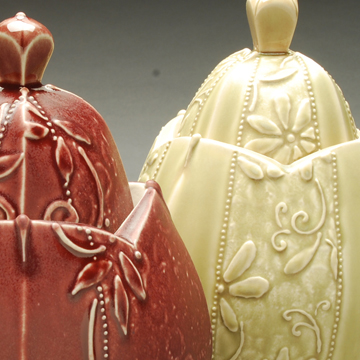
 

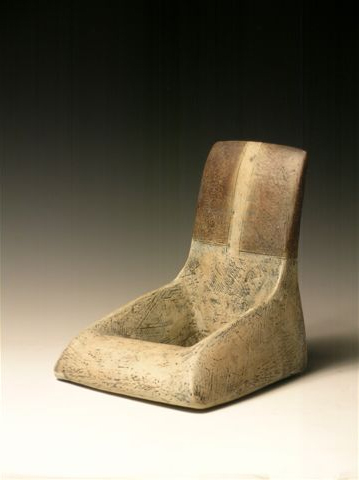
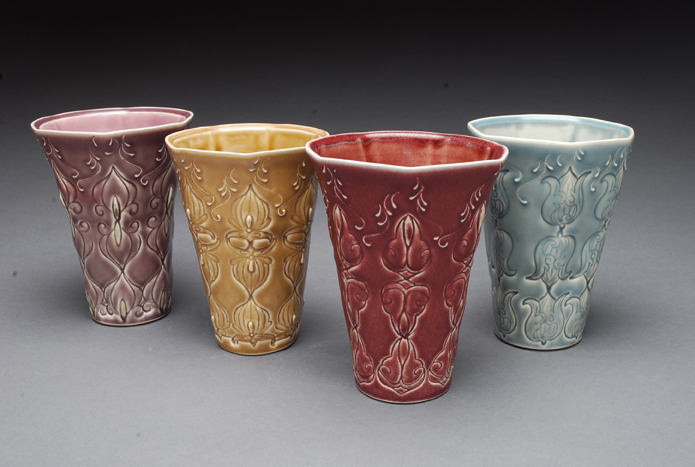
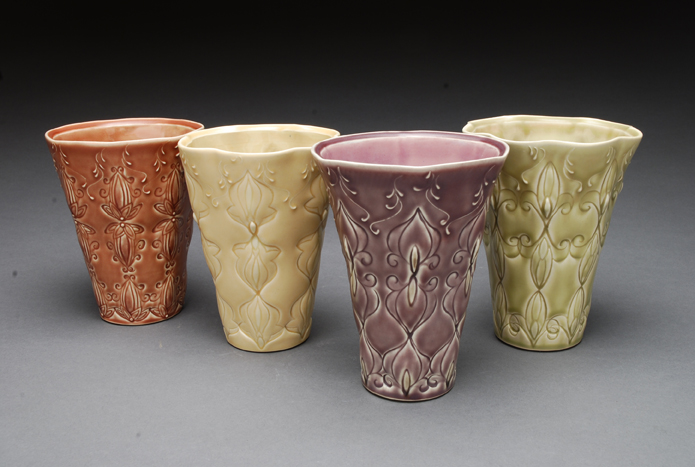
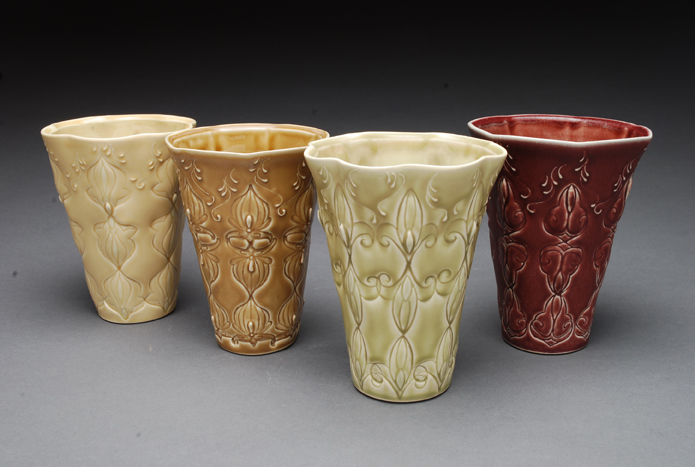
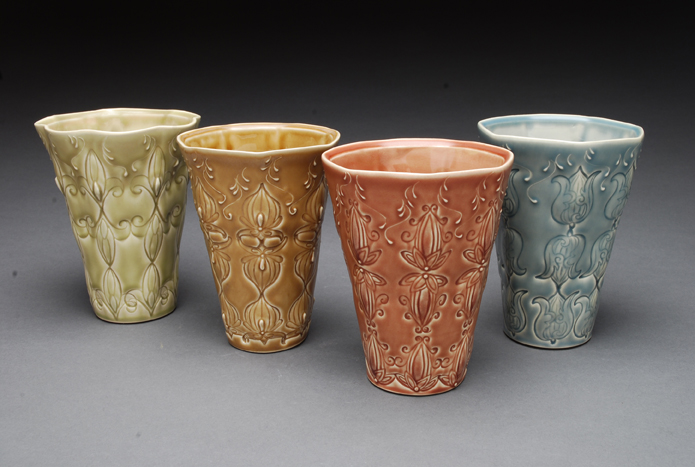
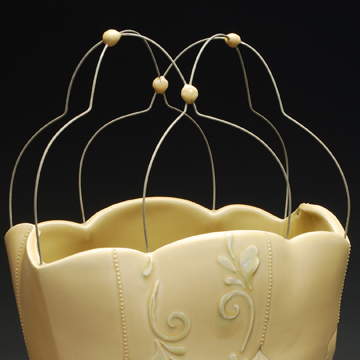
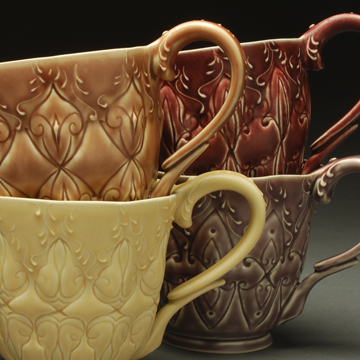
The images in this post represent some of the details—based directly on my influences and interests—I feel make my work unique, my style signatures: slip-trailed shapes that look like rolled fondant; ornate stamping; two-part cup handles;  and Kanthal wire as form. Vessels like my Corset series, surfaces like my satin color palette, and even an actual signature, like my name stamp (below) are also part of that design “signature”.  The best compliment I receive about my work is, “I’ve never seen anything like this before.”  What I bring to the pots is something no one else has: my touch, my eye, my mish-mash of interests and my passion. That’s style.

* I’m sorry to say I don’t remember the speaker for that 1998 Dallas/Ft. Worth NCECA slide lecture.  If someone knows, please drop me a note.
Ceramics I Love (Contemporary, Pt. II)

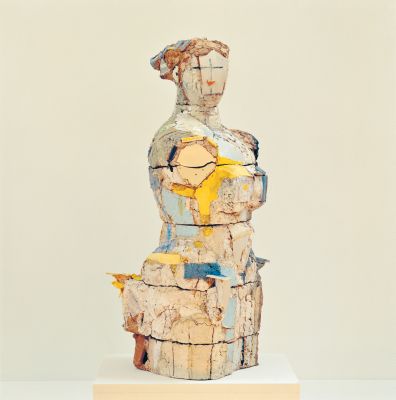
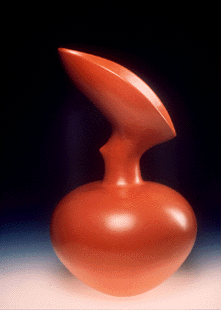
 Gertraud_Mohwald Magdalene_Odundo
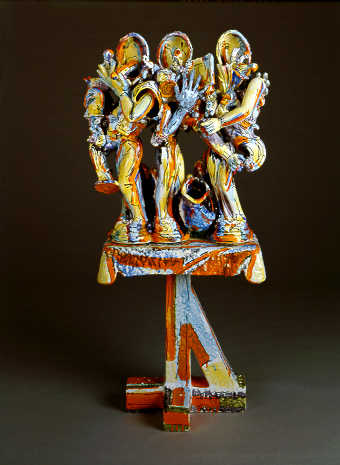
 Viola_Frey  Gary_DiPasquale
  
 Alan_Caiger_Smith

From top left, First row: Bobby Silverman, Gertraud Möhwald, and Magdelene Odundo;  Second row: Hans Coper, Viola Frey, Sam Chung and Gary DiPasquale;  Third row: Andrea Gill, Jeanne Quinn, and Mary Barringer;  Last row: Jason Green and Alan Caiger-Smith.

Visit Part I here to see not only the first grouping but also what I mean by “love” (vs. influence).  I enjoy putting these love montages together and hope to do one every so often.  I welcome you to leave a list of your all-time favorite contemporary clay artists in the comment section.

C O L O R


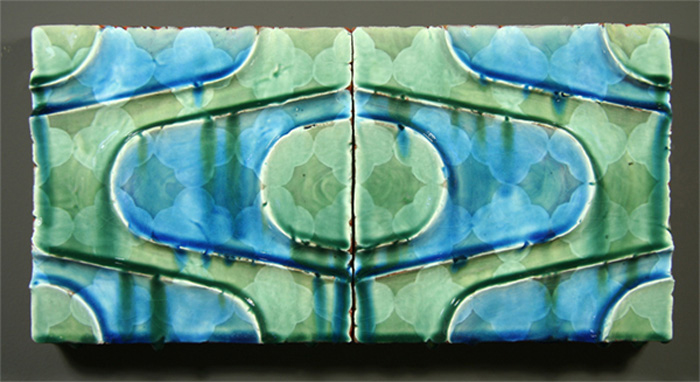
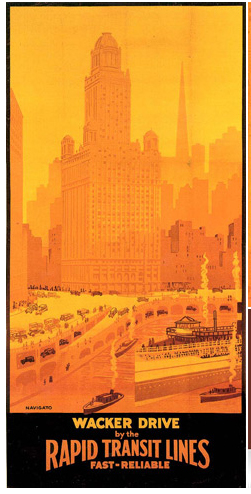
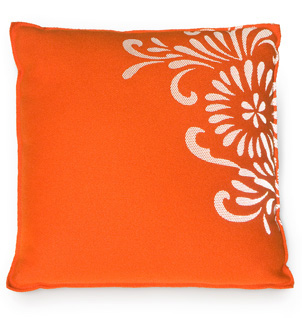
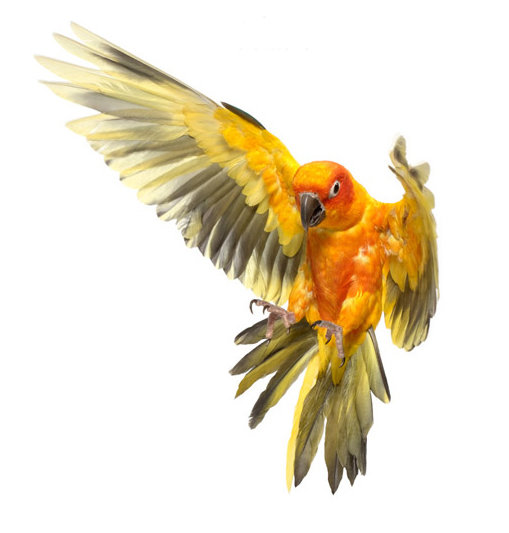
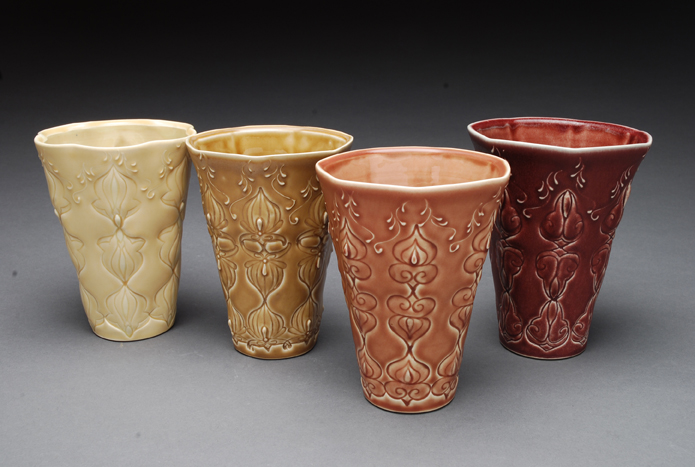
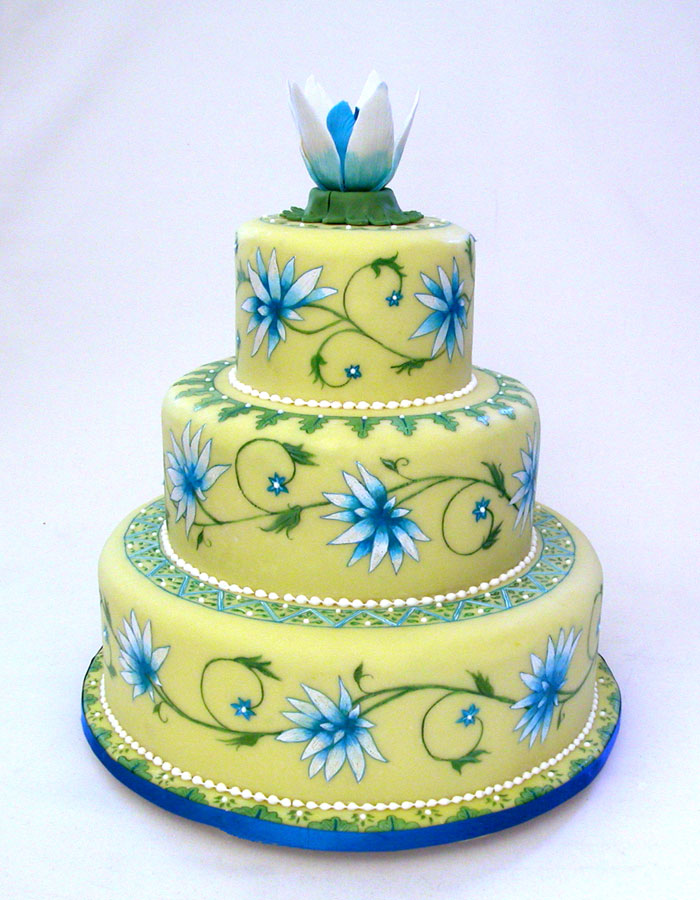
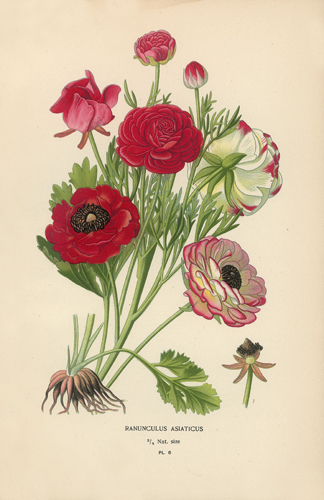
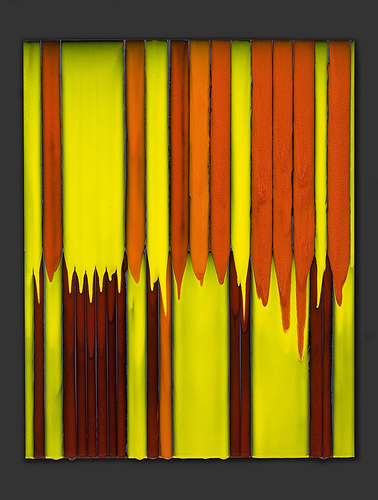
First row, left to right: Mark Rothko painting No. 22, 1949, 1920s Chicago Transit Authority poster, and Bev Hisey Reflective Folk CushionSecond row: autumn leaves, Andrew Zuckerman bird photograph and my warm-toned glazes;  Third row: Berlin Festival of Lights, Dave Jordano Storefront Church photograph and a Sevres potpourri vase;  Fourth row: Andrew Zuckerman Masked Lovebird photograph and my cool-toned glazes;  Fifth row: Hindu (Holi) Festival of Colours, JollyBe Chrysanthemums wedding cake, and peacock;  Sixth row: Cole & Son Dorset wallpaper, botanical print and Felissimo’s Colored Pencil SetLast row: KiBiSi chairs and a Viola Frey figure.
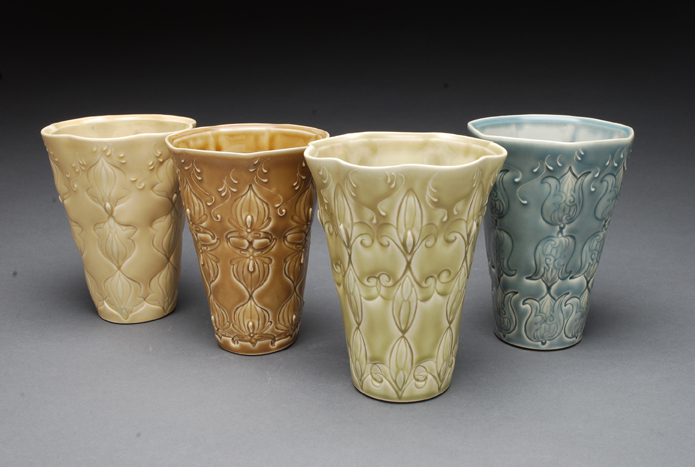
Oh, how I love color.
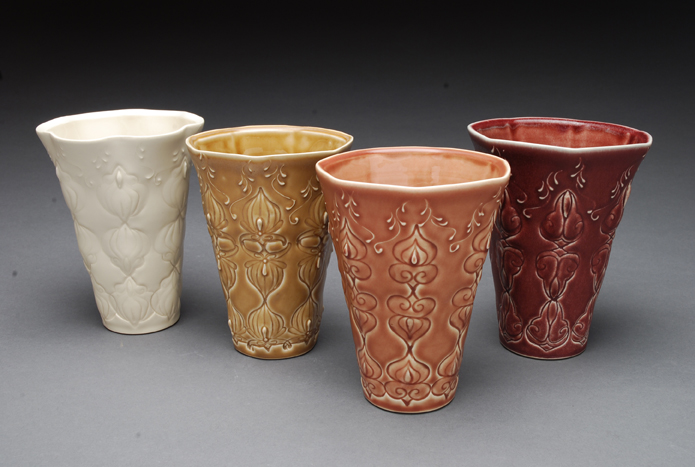
I suppose most everyone enjoys color, but if there were a 1 to 10 rating for color love, I would be at a 9 or 10 on the scale. I envy synesthetes and think about color throughout my day, in and out of the studio. I have a similar response to color that others do when they eat a piece of chocolate—that little butterfly feeling of yum.

Darks.

These tumbler images (above and below) represent the myriad of ways the nine colors in my palette can be placed together to give a completely different color feel.

Lights.

One of my grad school (MFA, Ohio U. 2001) professors, Joe Bova, recently commented to me that he believes “color is the most personal element in art”.  I certainly took a lot of time considering my color palette when I switched from high-fire soda (a more limited inherently glossy palette) to mid-range electric where the options are delightfully and overwhelmingly limitless.

Fruity.

I spent several months testing glazes to find both the color and quality (“breaking” satin vs. glossy) that best suits my work and me.  There were several determining factors.  The first and most important is that since I spend more time around my work than anyone else, I wanted colors I enjoy.  I also wanted colors that work well together, that compliment each other.  Finally, I wanted a palette that gives my collectors options: some people prefer neutrals, some prefer brights, and I have both as well as what’s in between.

Autumnal.

Because my work is predominantly monochrome*, I don’t think it’s as recognized for its color because an individual piece isn’t particularly colorful (i.e. having multiple colors).  Though I am currently running some new tests to add stripes and dots of patterned color, “colorful” in my pots comes from their proximity to each other.  I love seeing which colors my customers pair, mix and match when they buy 2, 4 or 12 pieces.

Neutrals.

All of my glaze colors are warm-toned, meaning that even the cool colors (blue, purple and green) have yellow undertones.  The names I have given the nine colors are Ivory (an off-white that looks almost like leatherhard porcelain), Frost (the super pale turquoise that looks a bit like a celadon), Honeycomb (a pale, warm yellow), Lime (a fruity yellow-green), Rosa (a salmon-y, mahogany pink), Cornflower blue (a rich lighter blue), Grape (a warm, plum-y purple), Caramel (a very yummy gold brown) and Blackberry (a deep wine, purple-y red).
Naturals.

On most forms, the satin glaze is the most visible, but the interiors are lined with a glossy version of the outside color, so I really work with 18 glazes.  Some forms, like my bowls and serving pieces, reveal more of the glossy color.  I like the contrast of satin to shine, so in addition to keeping the food surfaces functional with a glossy glaze, it is an aesthetic choice too.

Romantic.

Choosing glaze colors is not like picking out paint (potters will sardonically laugh and nod at that statement) because there is chemistry, elemental change and heat involved.  Red and blue does not necessarily make purple in the clay world.  My color palette came from having a sense of colors I wanted ( a green, a purple, a red—one of the hardest colors to “get” in ceramics, etc.) and then testing to match that expectation with the possibilities paired with my clay, cost of materials, firing temperature and application, not to mention aesthetic goals.  As my husband would say, it’s tricky business.

Cools.

I gather inspiration for color from everywhere.  There are my “usual” sources (period clothing, Art Nouveau prints, Islamic architecture, etc.), but there are also more obscure suggestions for color, like the images at the beginning of this post.  Right now I’m liking the blue in the shadows of the snow, the transitional green from light to dark inside an avocado and I keep thinking of that orange that was in a room my husband and I stayed at in Iceland six years ago.

Festive.

I believe the color in my work is one of several elements which makes my pots unique.  I agree with my professor that color is personal, a way to relay an emotion or spark a memory.  It’s a fascinating subject.

*I tend to use one color or two similar colors on a piece because I feel this best shows off the form, where multiple colors tend to divide the form. Imagine a woman wearing a purple shirt, blue belt and yellow pants next to one wearing a purple dress.

Ceramics in Design

Vautrin_Delvigne_Gauffre J_Adler_Brasilia_Stripes_Cone Delvigne_Vautrin_Panier_perce
J_Adler_Helix_vase Giapato_Hula_Hoop Lucchi_Burano blooming_over_cup_DroogR_McBride_Anamorphic_cups M_Wanders_Delft_vase_II R_McBride_Grooveware Eva_Zeisel_gravyandspoonairborne-snotty-vases-mwanders M_Wanders_Delft_vase_I M_Wanders_Delft_vase_IIIBoontje_Table_Stories Boontje_tile Boontje_Other_Side KleinReidStillLifeBlackBisque

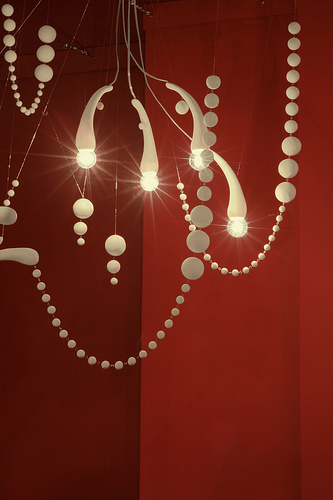
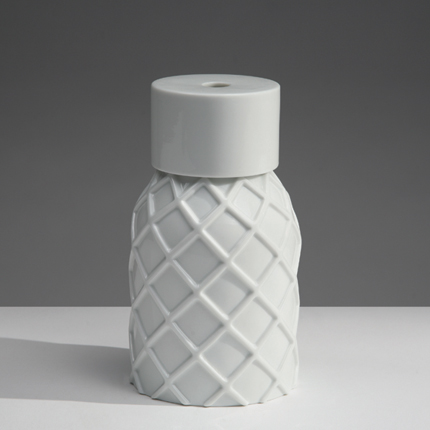
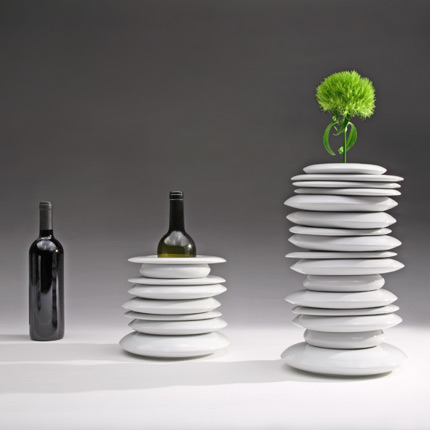
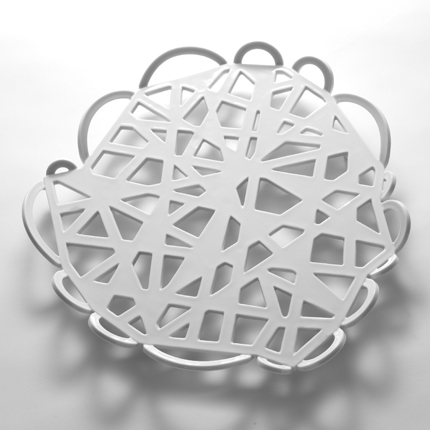
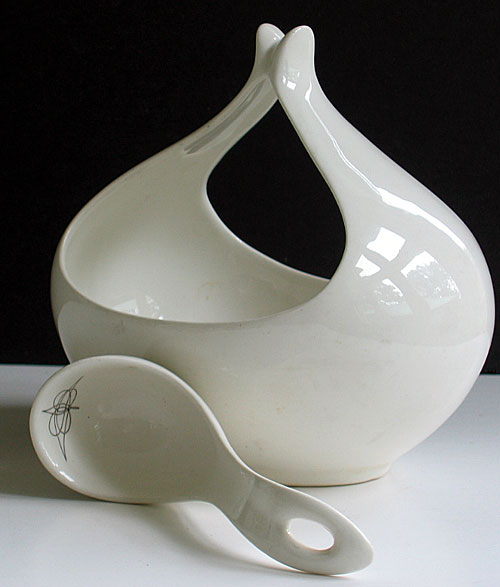
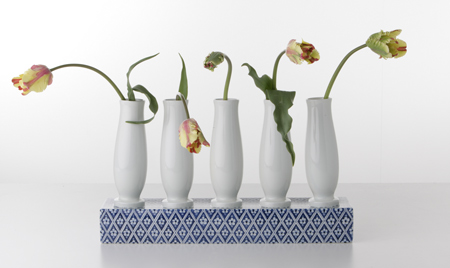
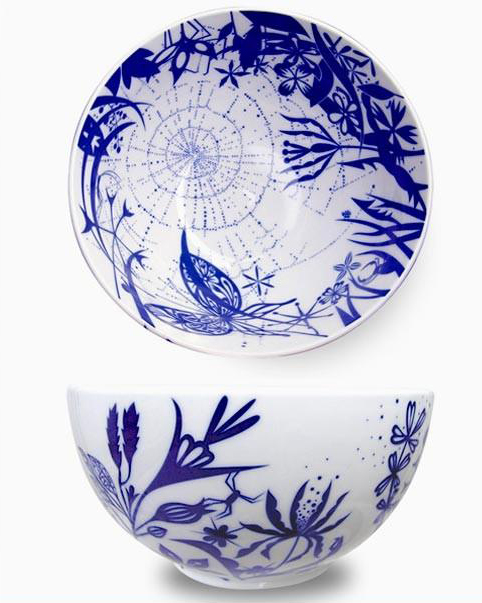
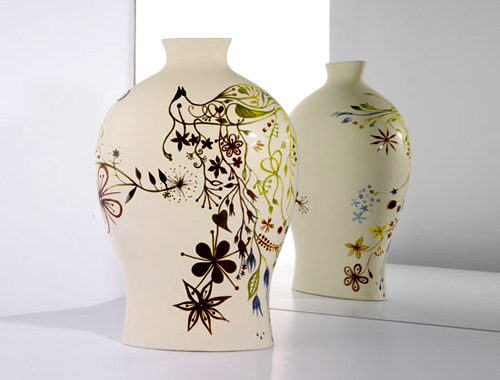
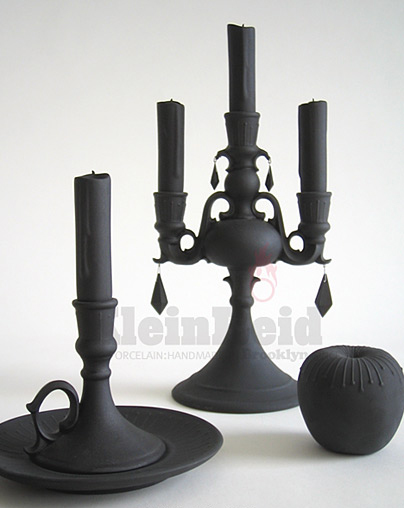
First row, from left: Vase Gauffré by Ionna Vautrin & Guillaume Delvigne for Industreal; Brasilia stripes cone vase by Jonathan Adler; Panier percé by Guillaume Delvigne & Ionna Vautrin for Industreal; Second row: Helix tall vase by Jonathan Adler; Hula Hoop by Cristiana Giopato for Industreal; Burano by Michele de Lucchi for Industreal; Blooming over cup by Mina Wu & Jan B. for Droog; Third row: Anamorphic cups by Ross McBride; Royal Delft vase by Marcel Wanders for Moooi; Grooveware by Ross McBride; Gravy boat and spoon by Eva Zeisel; Fourth row: Airborne Snotty Vase by Marcel Wanders; Fifth row: two more Royal Delft vases by M. Wanders for Moooi; Table Stories by Tord Boontje; Last row: Primavera tile by Tord Boontje for Bardelli; The Other Side Ceramics by Tord Boontje for Moroso; and Still Lfe: Black Bisque by KleinReid.

I’ve done a couple of past posts with wallpaper, furniture and home furnishings by designers I enjoy, so thought I should point out some ceramics too.  (See past posts under Favorites and Influences.)   I find these objects and the concepts behind them intriguing (most from the last eight years), and this group of designers are some of my favorites: Boontje, KleinReid, McBride, Vautrin & Delvigne, Wanders and Zeisel.  There is a strong and curious connection between studio artists/potters and industrial designers: kind of a chicken-and-the-egg history with overlap and sharing (or co-opting).   (Objects that weren’t simply white and black (and royal blue apparently) were scarce.  There must be practical as well as design reasons for the lack of color.)   I feel it’s important to be aware of what other artists in my field are up to, and awareness of form and concept for mass and high-end design markets feels equally important, especially as the lines between art and design have blurred.  Ultimately though I agree with a friend and find these objects smart, appealing and inspiring.

Postcard Retrospective

kk_08_postcard
Small covered jars*, 2008
KK_postcard_2007
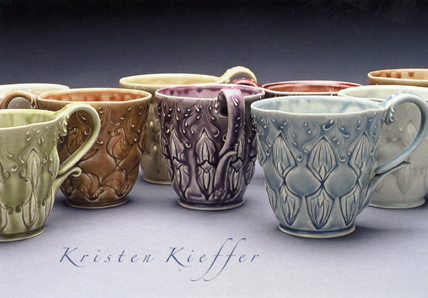
Stamped cups, 2007
KK_postcard_2005
Wire flower brick*, 2005
KK_postcard_2003
Flower boat (Corset series), 2003
KK_postcard_ 2001
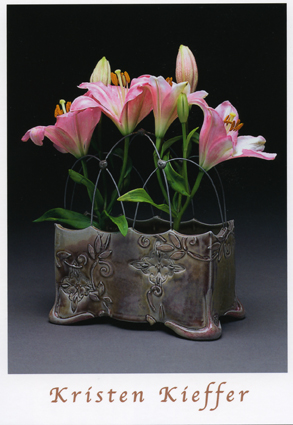
Lady vase, 2002
KK_gradschool_postcard_2001
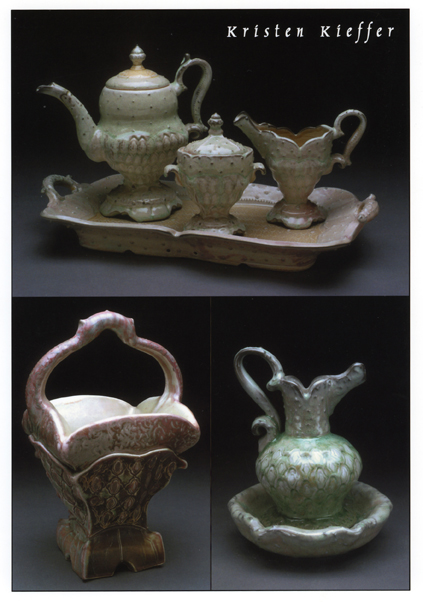
Tea set, Flower basket and Pourer with Saucer, 2001

I have had a “publicity” postcard made every year or two since 2001.  (There are two other postcards from ’95 and ’98 I’ll have to dig up for another—more humorous—post.)  The two most recent cards, with the jars and cups, are cone 7 electric; the others are cone 10 soda reduction.  The image directly above is my MFA graduation show card from Ohio University.  Six postcards of work from four different studios.  It’s interesting to see how things have changed, most notably after my thesis card, going from what I see as just “ornate” to more “elegant”.  Aside from additional layering, the surfaces haven’t changed a lot, but the lines that define the forms have.  They are more crisp and where I see the elegance happening.  I was the photographer for all of these too, baring witness to the transition from film to digital.

*If you would like a postcard, I would like for you to have one.  My most current 2008 Covered jar postcard and the 2005 Flower Brick postcard are still available.  (The former because it’s still new and the latter because a printing error left me with 2500!)  Simply drop me an email with “Postcard” in the subject line, your mailing address in the body, and specify which card: 2008, 2005 or both.  I would love for you to have a pot, but this is a nice precursor, and something you can actually hold in the meantime.

onelovelyblogawardThank you to Charan Sachar of the great Creative with Clay blog for presenting me with one of his Lovely Blog Awards.  I appreciate the friendly acknowledgment!

Kanthal Wire-handled Basket

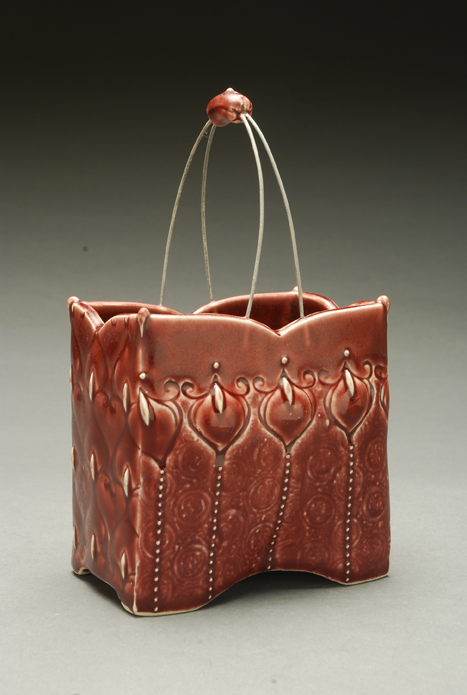
Kristen_Kieffer_Wire_BasketThis is a lil’ Wire Basket (7″h x 4″w x 3″d) I made over three years ago.  I enjoyed making it, and have continued to like it, but just this week decided to make more.  My ideas are frequently ahead of my fingers.  I have described my process —including idea- development— as being glacial at times.  (This piece seems to exemplify the point.)  My sketchbooks contain more ideas than I will probably ever make.  I’m not quite sure what makes the time seem right to pursue certain ideas, but this one’s has arrived!

I have used Kanthal wire on certain forms for years as a way to “draw” in space with another material.  (Check out the Wire Flowerbrick on my Gallery page, and a brief explanation of Kanthal wire on my Process page.)  More to come!