Lovely Intangibles: A Statement

This is the article I wrote for the NCECA Journal, Volume 34 as one of the
demonstrating artists for the 2013 conference in Houston; my thoughts on
function and ornamentation:

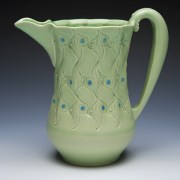
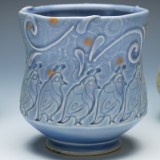
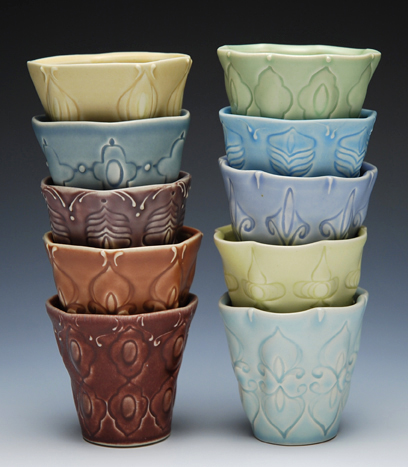
Kristen Kieffer Cups 'Clover deluxe'

“Look Doris, someday you’re going to find that your way of facing this realistic world just doesn’t work. And when you do, don’t overlook those lovely intangibles. You’ll discover those are the only things that are worthwhile.” ~ John Payne as Fred Gailey in the 1947 film Miracle on 34th Street

I believe beauty is a worthwhile pursuit, and my pots are a celebration of that beauty. Stated simply, I make decorative pottery that is meant to be used. While working in my studio, I simultaneously consider the aspects of a well-functioning pot and the elegant decoration that enhances a strong form. These three components (function, ornamentation, and form) combined yield a beautifully designed object celebrating the beauty of everyday use. This “ornate utility” is probably an oxymoron to some, but it is my goal as a potter. I seek to make pots that balance good function with robust decoration, which is very different from making complex pieces for special occasions. The latter pursuit is more about elaboration than use. Making decorative pots for everyday requires equal consideration of function, form, and surface; an attention and tribute to what I call the “lovely intangibles.”

The lovely intangibles are what I think about when I’m working in my studio and reference when I teach; the elements that we can be more aware of when they are missing, ironically, than when they are included. They are the aesthetic and functional components that make up the whole of a considered pot, anything from the ribbed edge that delineates a curve to the shadowed reveal of a carved foot. They are the fine details necessary in creating an equally well-functioning yet elegant piece, but something that may not be definable (or even identifiable) to the user. These lovely imperceptible, elusive intangibles are crucial in the completion of a beautiful, useful object.

My active consideration of the details is required for the pots to be both appreciated and used when they leave my studio. The best compliment is when a customer is attracted to my work because of the form, picks up the piece because of the surface, and delights in the strength of the piece once it is in their hands; none of which may have been conscious thoughts. A customer’s split-second conclusion to like and/or buy a piece is in response to my attention to all the micro and macro intangibles, like purposefully making my pottery handles plump, walls strong, and lips full for comfort, for example. By altering and/or stamping the clay at an early stage I refer to as suede, the pots have a soft appearance which makes them more inviting. I use a variety of decoration techniques like slip-trailing and slip-sponging to provide tactility and visual depth. All of my work is glazed with mostly satin surfaces of rich colors adding to the user’s pleasure. The integration of tactile decoration with soft forms and solid components make the pieces touchable and inviting.

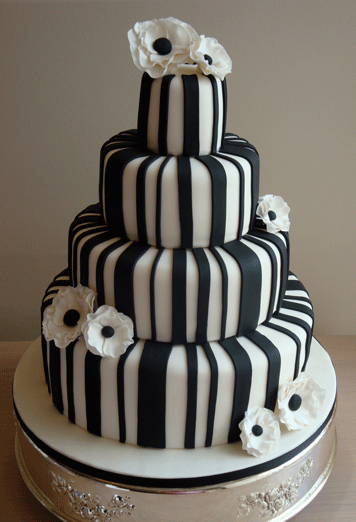
I refer to my work as ‘ornately, elegant for everyday’ and classify my pots as ‘Victorian modern.’ Both of these phrases fit my desire for cross-cultural influence, and an appreciation of an era when ornamental abundance was also useful. I want to offer my customers a bit of luxury for their home décor and daily life. My hope as a maker is to marry my diverse influences and the splendor of past eras with a modern desire for artistry and function. My influences range from 18th century, silver service pieces and Moroccan architecture to couture clothing and industrial design for form ideas, and from Art Nouveau illustrations and vintage embroidery to cake fondant and upholstery for pattern ideas. Such diversity combined with my own background and distinct studio processes culminate into a style that I hope is as unique as it is luxurious.

I enjoy my pursuit of beauty, making ornately functional pots for those who would like a little elegance in their everyday. Attention to those lovely intangibles so another can enjoy their morning coffee a little more is what makes being in my studio worthwhile.

Layered Layers

Kristen Kieffer Yunomi Mishima groupingYunomi detail

I spend most of my studio time thinking about (and blog time writing about) form and pattern interplay. My decoration can’t exist without the forms they wrap around, and the forms are incomplete without their surface layers. I make decorative ceramics because I love clay as a material, function as a parameter, and pattern as a layer that ties it all together.

I’m not sure where my love of decoration and pattern began. Perhaps going to antique shops as a kid had influence. Maybe it was the endless drawings with my Spirograph. There’s just something about pattern that feels like home to me. Like touching my Grandma Idene’s funky necklace or filigree bracelet as a kid during a car ride, and asking her to tell me its story for the millionth time. However it came about, I’ve liked ornamentation forever; pattern and symmetry are in my nature.

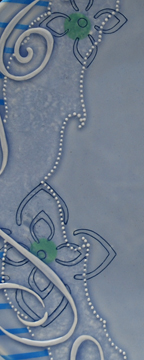
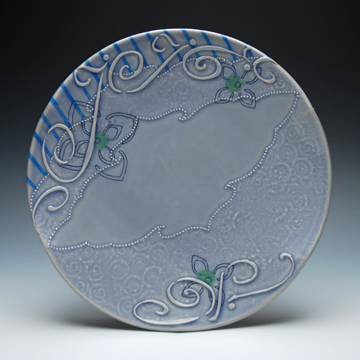
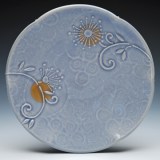
Kristen Kieffer Large plate Periwinkle floral Plate deco detail Periwinkle floral
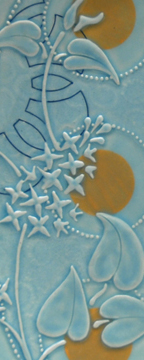
Plate deco detail Frost : tangerine Kristen Kieffer Large plate Frost Victorian Moroccan

Why I choose a particular pattern and layer is no simpler to solve than why pattern at all. I can’t say I layer intuitively. I do pick and chose pattern on impulse, but it’s probably more about what I’ve learned in the 2D and 3D design classes I loved for my degrees than instinct. There’s not always an answer to why we’re drawn to certain colors, shapes, or decoration. I suppose I could just say I love ‘pretty’ and need loveliness in my life, know others do to, and these pieces are my response. But there is more to it.

I’ve been decorating my pots for years, but layering began in earnest when I changed how I glaze-fire my pots, switching from cone 10 soda to cone 7 oxidation in 2006. I could no longer rely on the kiln’s atmosphere to provide depth, so took control of adding levels of richness myself.

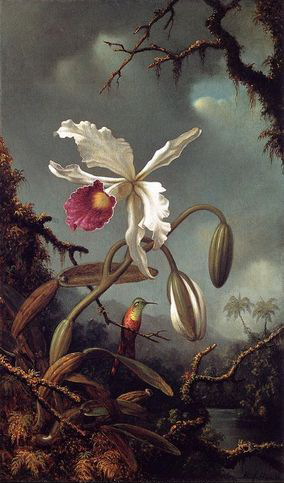
Patterns create depth, add visual and tactile interest, as well as invite pause. With forms like these new plates and pillow tiles, I layer in part to create an environment in which my customers can get lost for a moment (like the atmospheric paintings I love by Martin Johnson Heade). In a form like the yunomi cups, the extra layer of stamped pattern can spark reflection on a customer’s own history, culture, youth, or vacations abroad perhaps. What I bring to pattern and form as the maker can be quite different from what a viewer takes. What I see as Art Nouveau flora might remind someone else of their aunt’s cottage garden, for example. I like the personalization that can happen in the translation of decoration.

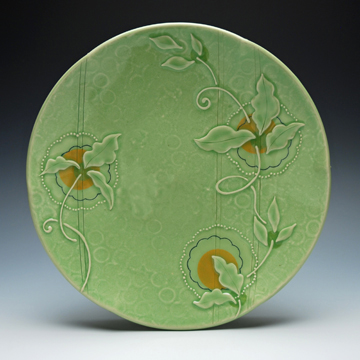
Kristen Kieffer Large plate Green flora Plate deco detail Green : tangerine
Plate deco detail Periwinkle arabesque 

All of the images in this post represent the recent addition of a new decoration layer; a new series with a ceramic technique called Mishima. Originating centuries ago in Korea, Mishima is a way of drawing on clay by inlaying color into a (usually) fine line. I’ve demo-ed this technique for years, including on my Surface Deco DVD, but this is the first time I’ve incorporated it into my own work. The delicate, navy blue line on all these pieces is Mishima. And for me, that drawn line adds another layer of contrast, another layer of atmosphere, another layer of intrigue.
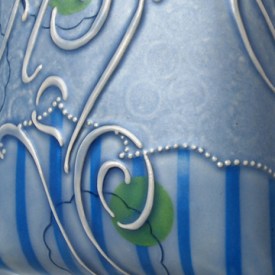
As I mentioned in my last post, I think of the ceramic layers and assembling the disparate pattern shapes as being like collage. Each of the plates pictured for example (after I throw, trim, and alter) has four separate patterns and techniques layered onto the surface. First, I apply the subtle background texture, kind of the ground for everything else. I brush slip (liquid clay the consistency of heavy cream) across the surface, and press a patterned sponge I make into it, leaving a soft texture reminiscent of the textiles I look to for influence. (This technique is one of many I learned from mentor and friend, John Glick, master of layers extraordinaire.) I use cutout shapes of paper to resist some of the slip-sponging, so there are some smooth areas next to the pattern.

Once the slip-sponging has dried, I apply bright polka dots and stripes of underglaze into those smooth areas, which also requires the use of paper as a resist so the edges are crisp. These pops of color become focal points, and give a perfect contrast background for the next layer of slip-trailing. Once the underglaze has dried, I apply the raised lines, swirls, shapes, and dots of slip with a trailer (like small-scale cake decorating). I think of the slip-trail as the main character of the decoration story. Its imagery ties all the other patterns together.

Pillow tile detail Cornflower blue floral Pillow tile detail Green scroll w. tangerinePillow tile detail Pear Arabesque Pillow tile detail Periwinkle calligraphic

Pillow tiles detail. Full tiles pictured here.

Slip-trail is the last step for most of my pieces, but now I’ll be adding the technique of Mishima here and there, as with these. This requires first laying down a layer of liquid wax to protect all the prior layers. Once the wax has dried, I use an Exacto knife to incise into the leatherhard clay surface, and then fill that line with underglaze. I like the navy underglaze because it’s a dark classic color, and not severe like black. It’s not as quick and easy as drawing with a fine Sharpie, but it does result in a similar drawn line that I love. These lines feel like memories or echoes of the raised slip-trail lines.

All of these ceramic decoration techniques result in very different qualities of line (as I mention when I teach and on my Deco DVD). Each line yields a different shape and pattern, and when paired and layered, they become a formal investigation of 2D decoration on a three-dimensional form. Or they tell a story. Or they’re just pretty. I think all three, but am happy with what you see.

This new series of Mishima pieces is debuting exclusively in my online Etsy shop. I did a countdown to New Year’s listing a pillow tile a day in my shop with updates on my FB page, so those are available now. The plates and yunomi cups will be listed daily throughout this week in the same fashion, so check the top of my shop here. And stay tuned!

Wall Candy


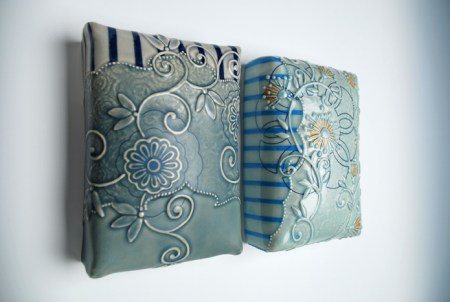
Every other year or so, I make a small series of wall forms, each more elaborate than the last. At almost 3″ deep, they’re too dimensional to be called a tile, and too soft-looking to be called a box; so “pillow” seems the most suitable term for this round, as they are plumper and poofier than ever before. I really like making these forms. I mean, I really like making these…A LOT. They are my opportunity to explore layered pattern over volume without having to balance function. (Though I make sure they hang easily, and their purpose is adding beauty, so they ‘function’ perfectly!)

I think of these pieces as being collage because I’m assembling disparate pattern as well as layering four different ceramic decoration techniques (slip-sponge, underglaze, slip-trail, and mishima). But I also think of them as little paintings because I’m applying color and texture to a surface; the deco and the canvas are just both ceramic. So, ‘ceramic collage pillow paintings’ ~ perfect for adding a lovely focal point to your home décor, solo or grouped. Or just call them ‘wall candy,’ that suits me and my influences just fine.

This is just the beginning of what’s new for 2013 from my studio, some of which are already available in my online shop. These rich layers have also made their way onto some of my yunomis and large plates, all also debuting exclusively in my Etsy shop in the New Year. More posts on form and deco newness coming up with a few teasing glimpses on my Facebook page in the album New Work 2013.

Polka Dot Origin, Influence, & Faves

Dots on my pots!

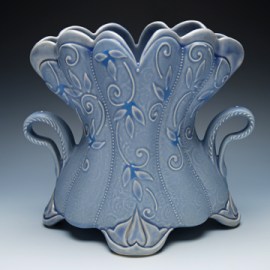
  Corset series vessel w. dots    
  

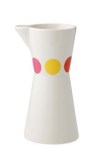
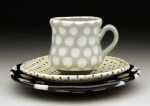
My recent work with dots: Screen vase pair, yunomis, flower vessel (Corset series), pitcher, small covered jars, small stamped bowls, and plate.

I started layering dots (and stripes, which will be a future blog post with more influences and faves) in early 2010. The added pattern came through self-critique and seeing a need to both visually pop the raised slip-trail patterns by providing small background color, as well as add some modern fun to the Victorian flavor of my work.

So the primary purpose for the polka dots was to further my love of layered surfaces for the pots, formally creating even more richness and depth. The dots punctuate the patterns.

A close secondary function for the dots has been to add some joyfulness; polka dots are rarely somber. Though I do receive some comments by folks who favorably see ‘Disney,’ I think my pots can appear more serious than I actually am or intend. In some ways, I’m still the five-year-old tomboy who hated my freckles (my own personal polka dots), deciding one summer day that, with the aid of my grape-smelling marker, they would be much better purple. So, the dots are a way to include my influences of sweets, for example, as well as infuse connotations of informality and playfulness.

You can check out all the dotty pots in my online shop.

Polka dot influences below with more here:


Norma Kamali dressTattoo round rug by Deanna Comellini  
  

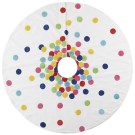
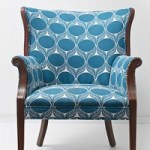
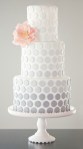
.Pictured above from top right, first row: Peter Murdoch ‘Dot chair’ for kids; Dot window building in Beirut, Lebanon; and ‘Confetti’ tree skirt.  Second row: Draga Mathilde sofa; and Yayoi Kusama concept store for Louis Vuitton.  Third row: June Leaf organic canvas in Marine; Mod fashion;  and vintage dress.  Fourth row: White-grey ombre dot cake; paper straws; and slipper chair.  Fifth row: Norma Kamali dress; Tattoo round rug by Deanna Comellini; and ‘Op-art Attracts’ wedge by ModCloth.  Last row: Quilt in progress by Judy Martin and starfish.

The origin of the Polka Dot: It is believed that the name “polka dot” came from the Polish polka dance, and first appeared by name in 1854 in The Yale literary magazine. At the same time that the polka dance and music began in the mid 19th century, polka dots were popular and common on clothing. The pattern name was chosen simply because the dance gained such acclaim, which led to many contemporary products and fashions also taking the name. (There used to be “polka-hats” and “polka-jackets,” for example.) Most disappeared with the popularity of the actual polka dance in the late 1800s. Only the printed fabric pattern remained fashionable, and the name stuck.

Polka dot favorites of fellow studio potters and ceramic artists:

Andrew Martin  Brenda Quinn  Malene Helbak
Kari Radasch  Jun Kaneko polka dot sidewalk, Art Museum of South TX
Chiho Aono  Sandblasted process, Hans Tan Studio via Ateliér Keramiky  Ayumi Horie
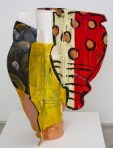
Harrison McIntoshMeredith Host  Harumi NakashimaTetsuo Hirakawa  Betty Woodman  Sean O'Connell

Pictured above from top right, first row: Andrew Martin, Brenda Quinn, and Malene Helbak.  Second row: Kari Radasch and Jun Kaneko.  Third row: Chiho Aono, Hans Tan Studio, and Ayumi Horie.  Fourth row: Harrison McIntosh, Meredith Host, and Harumi Nakashima.  Last row: Tetsuo Hirakawa, Betty Woodman, and Sean O’Connell.

Glaze Palette 2012


Colors clockwise from top right: Spring Green, Aqua, Periwinkle, Yellow Pear, Frost, Garnet, Rosa, Grape, Cornflower Blue, and Honeycomb. After several adds and subtractions for 2012, these are the current, and lush, satin colors from my studio. Each satin has a corresponding glossy version for the interiors, for aesthetic contrast as well as function. (Pots that are mostly interior, like plates and some bowls, are glazed completely in gloss.) Every item in my online Pottery Shop is labeled with it’s color name so you can search by color to find your favorites.

I run extensive tests to develop new colors for my palette, and then mix large amounts of each glaze by hand for dipping and pouring. There is a Glaze Testing album on my Facebook page with more pix of the steps behind the results, and a bit more about my techniques and materials on my Process page. I enjoy adding new colors, even though the process to get there is laborious. The end results are very satisfying…and ColorFULl! 

*Cake* Cake Stands


As a lover of cake (as influence as well as treat), it makes sense that I would make cake stands. Several years ago, I did make a couple, but lost interest (and apparently didn’t even photograph them).  However!  My new venture into polka dots and stripes in general, and stripe-y plates specifically, has gotten me jazzed to wrap ribbons of striped color down and around to accentuate this fun form.  Above are two recently completed cake stands I photographed from various angles.  Both are about 4″ h x 10″ diameter (able to display an 8 & 9″ cake respectively) with glossy tops and satin-glazed sides.

This summer, I finally got around to making a more substantial cake display form based on my drawings and metal-working influence.  I am humorously referring to it as a “cake throne”.  At some point, I hope to post a pic after the glaze fire, as well as make more. Pictured: Cake Throne detail at leatherhard

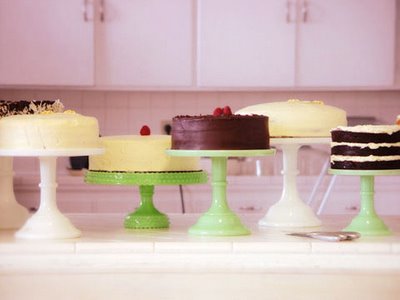
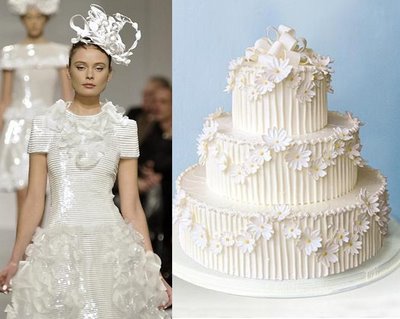
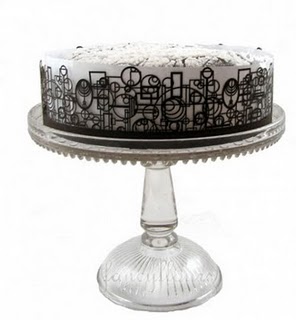
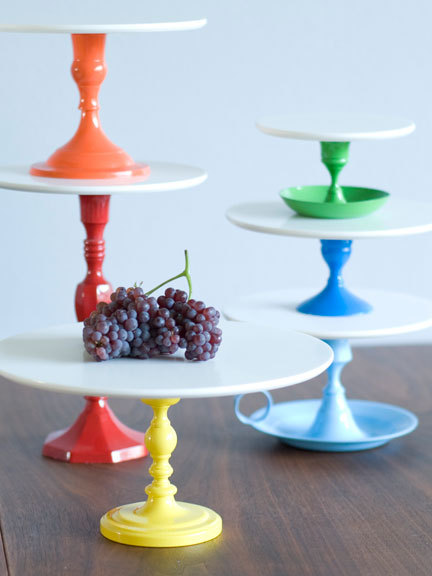
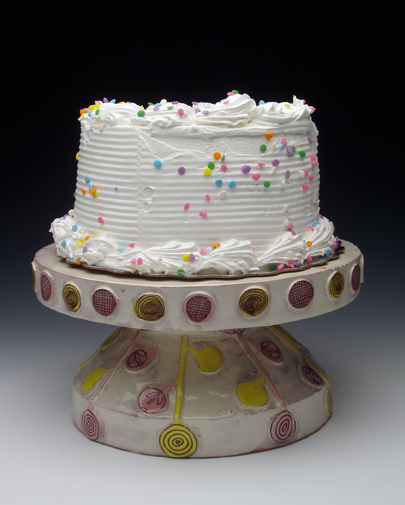
It seemed fun and appropriate to share some other cake stands (with and without cakes, functional and not) in this post, kind of a sideways follow-up of favorites to my Cake as Influence post.  I sometimes use the word “cake” as an adjective to mean “great,” “lucky” or “awesome”.  So, below is a range of very *cake* cake stands (and other peripherally related images) I found in my searches, yielding a range of handmade to manufactured, new to vintage and ceramic to, well, oil. Enjoy!


If you hover your cursor over the pics above, you can get most of the info below too. From top left: Vintage glass cake stands with cakes; Esther Coombs’ 3-tier Rose Cake Stand, EstherCoombs on Etsy; and Karl Lagerfeld for Chanel dress paired with wedding cakes, Trend de la Creme blog post; Second row: Blaue Blume cake stand by Tina Tsang; The Husband Catcher Cake, oil painting by Janet Hill; and Art Deco cake stencil wrapper from Fancy Flours; Third row: Silver cake stand;and Maren Kloppmann’s Ledge Platter; Fourth row: Whitney Smith’s Bird Cupcake Stand, WhitneySmith on Etsy; Lemon cake with blue icing and dots, Country Living photo shoot; and Iacolli & Mcalllister cake stands on Big Cartel; Fifth row: Kari Radasch’s cake stand with confetti cake, Redware on Etsy; Lazy Daisy skirts by Made With Love By Hannah (cake stands have skirts, and these are super cute!); and w2products Willow cake stand; Sixth row:  Jeanette Zeis’ Lace cake plate, vesselsandwares on Etsy; 4 Layer Cake, oil painting by Paul Ferney; and antique three-tier cake stand;  Seventh row:  reproduction of 1930s-era glass cake stand; D’lovely cake stand, fergusonpottery on Etsy; and Elle cake stand by Clara French; Last row:  cake stand from The Tea Pot Shoppe; striped cake by The Yummy Cake Company; and Black Lace Cake Stand from the MoMA store.