Garden Influence & Flora Faves

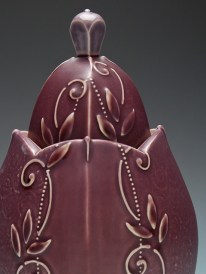
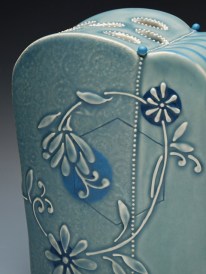
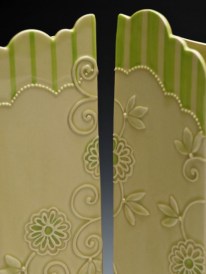
Kieffer Deluxe clover cup in Periwinkle Kieffer Small covered jar detail in Grape Kieffer Plate detail w. leaf pattern Kieffer Flower brick detail in Cornflower blue Kieffer Screen vase pair detail in Yellow pear Kieffer Pillow tile detail of Lilac pattern in Frost

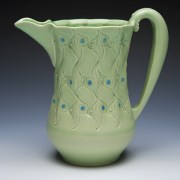
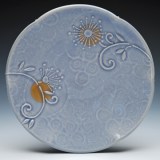
Details of my pots above: Deluxe clover cup, Small covered jar, Large plate,
Flower brick, Screen vase pair, & Wall pillow tile.

More flowers have been popping up on my work in the last couple of years. And why not? I love them! In the dead of a Massachusetts winter, I long for spring and summer, and daydream about those floriferous seasons by placing a little bit of them on my pots.

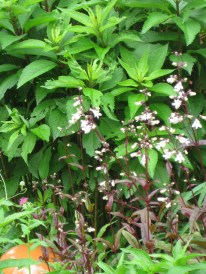
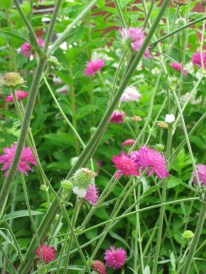
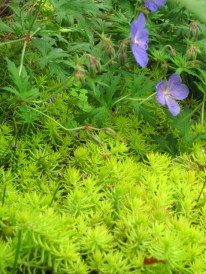
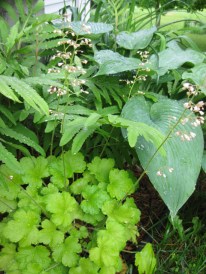
Penstemon & Eupatorium Knautia Geranium & sedum Lady's Mantle, Alchemilla Allium bulgaricum Heuchera and dicentra

First row: Penstemon & Eupatorium, Knautia, and Sedum & Geranium.
Second row: Alchemilla, Allium bulgaricum, and Heuchera.

I am completely preoccupied with being outside during this time of year, specifically, with being in or sitting beside my flower garden. I wrote about my lovely distraction four years ago in this Perennial Influence post, which still perfectly articulates every sentiment I have for gardening, so I hope you’ll give it a read. A recent pic I posted to my Facebook Page of my main perennial bed and the corresponding number of thumbs up seems to indicate a universal need and appreciation for beauty and diversion, so I thought I’d do an updated pictorial from garden.

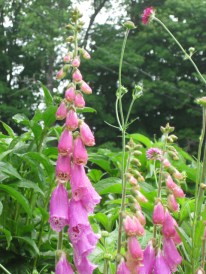
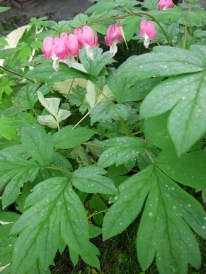
Dicentra & Lamium Sedum Nepeta Spirea & Knautia Digitalis & Knautia  Heuchera, Hosta & Fern

First row: Dicentra & Lamium, Sedum, and Nepeta.
Second row: Spirea, Digitalis & Knautia, and Heuchera, Hosta & Fern.

I seem to think about my plantings very similarly to how I think about my pots: How do they look from farther away, as well as close up? What colors best compliment a grouping? What shapes and textures add to the whole? Which are heartbreakers not worth the effort, and which make me the most happy?

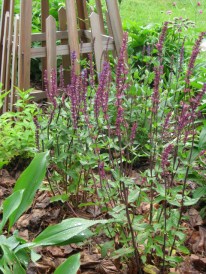
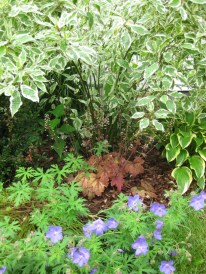
Salvia Lupine Dogwood, Heuchera, Geranium & Hosta Ilex Hosta Patriot  Dicentra

First row: Salvia, Lupine, and Geranium, Heuchera, & Red-twig dogwood.
Second row: Ilex, Hosta (Patriot), and Dicentra.
All images courtesy of my gardens.

Happy Summer!
Below are detail pix of pottery and sculpture faves that have hugs & kisses of flora.

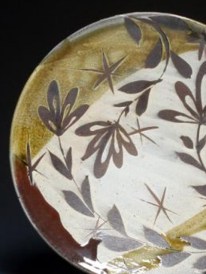
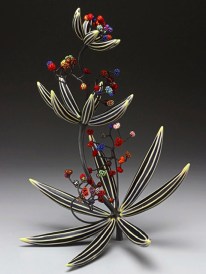
Michael Connelly Matt Wedel McKenzie Smith Makoto Kagoshima Baraby Barford Kurt Anderson Michael Kline Michael Sherrill Steve Colby

First row: Michael Connelly, Matt Wedel, and McKenzie Smith.
Second row: Makoto Kagoshima, Baraby Barford, and Kurt Anderson
Third row: Michael Kline, Michael Sherrill, and Steve Colby.

Polka Dot Origin, Influence, & Faves

Dots on my pots!

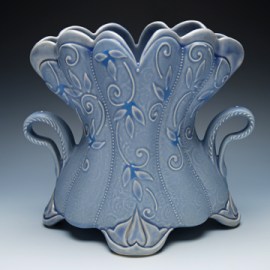
  Corset series vessel w. dots    
  

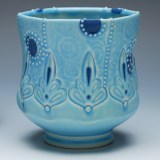
My recent work with dots: Screen vase pair, yunomis, flower vessel (Corset series), pitcher, small covered jars, small stamped bowls, and plate.

I started layering dots (and stripes, which will be a future blog post with more influences and faves) in early 2010. The added pattern came through self-critique and seeing a need to both visually pop the raised slip-trail patterns by providing small background color, as well as add some modern fun to the Victorian flavor of my work.

So the primary purpose for the polka dots was to further my love of layered surfaces for the pots, formally creating even more richness and depth. The dots punctuate the patterns.

A close secondary function for the dots has been to add some joyfulness; polka dots are rarely somber. Though I do receive some comments by folks who favorably see ‘Disney,’ I think my pots can appear more serious than I actually am or intend. In some ways, I’m still the five-year-old tomboy who hated my freckles (my own personal polka dots), deciding one summer day that, with the aid of my grape-smelling marker, they would be much better purple. So, the dots are a way to include my influences of sweets, for example, as well as infuse connotations of informality and playfulness.

You can check out all the dotty pots in my online shop.

Polka dot influences below with more here:


Norma Kamali dressTattoo round rug by Deanna Comellini  
  

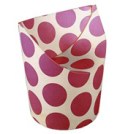
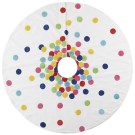
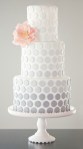
.Pictured above from top right, first row: Peter Murdoch ‘Dot chair’ for kids; Dot window building in Beirut, Lebanon; and ‘Confetti’ tree skirt.  Second row: Draga Mathilde sofa; and Yayoi Kusama concept store for Louis Vuitton.  Third row: June Leaf organic canvas in Marine; Mod fashion;  and vintage dress.  Fourth row: White-grey ombre dot cake; paper straws; and slipper chair.  Fifth row: Norma Kamali dress; Tattoo round rug by Deanna Comellini; and ‘Op-art Attracts’ wedge by ModCloth.  Last row: Quilt in progress by Judy Martin and starfish.

The origin of the Polka Dot: It is believed that the name “polka dot” came from the Polish polka dance, and first appeared by name in 1854 in The Yale literary magazine. At the same time that the polka dance and music began in the mid 19th century, polka dots were popular and common on clothing. The pattern name was chosen simply because the dance gained such acclaim, which led to many contemporary products and fashions also taking the name. (There used to be “polka-hats” and “polka-jackets,” for example.) Most disappeared with the popularity of the actual polka dance in the late 1800s. Only the printed fabric pattern remained fashionable, and the name stuck.

Polka dot favorites of fellow studio potters and ceramic artists:

Andrew Martin  Brenda Quinn  Malene Helbak
Kari Radasch  Jun Kaneko polka dot sidewalk, Art Museum of South TX
Chiho Aono  Sandblasted process, Hans Tan Studio via Ateliér Keramiky  Ayumi Horie
Harrison McIntoshMeredith Host  Harumi NakashimaTetsuo Hirakawa  Betty Woodman  Sean O'Connell

Pictured above from top right, first row: Andrew Martin, Brenda Quinn, and Malene Helbak.  Second row: Kari Radasch and Jun Kaneko.  Third row: Chiho Aono, Hans Tan Studio, and Ayumi Horie.  Fourth row: Harrison McIntosh, Meredith Host, and Harumi Nakashima.  Last row: Tetsuo Hirakawa, Betty Woodman, and Sean O’Connell.

Big Honors! CM & NCECA

I’m thrilled to share that my work was chosen for Ceramics Monthly‘s September 2012 cover! CM is the most popular clay magazine in the biz with a total market reach of over 140,000. It is a huge honor that is in conjunction with a thoughtful, four-page article titled “Kristen Kieffer: The Impact of Daily Elegance” written by Kansas State University graduate student Lauren Karle. Big, huge thank yous to Lauren for contacting me, the lovely writing, and hard work through the process. Thank you, Lauren and CM!

The second big honor announcement is that I will be one of four demonstrators at NCECA‘s (National Council on Education for the Ceramic Arts) conference for 2013 in Houston, TX, March 20 – 23! What a thrill to be asked to demonstrate at the largest annual gathering of clay folk in the world, where upwards of 4,000 makers, teachers, and collectors meet to see great work, listen to provocative lectures and panels, and watch awesome demos. If you’re heading to Houston, come see me on stage Thursday morn, 9-noon and Friday afternoon, 1-4, and give me a cheer of support! Thank you, NCECA!

Postcard Retrospective

kk_08_postcard
Small covered jars*, 2008
KK_postcard_2007
Stamped cups, 2007
KK_postcard_2005
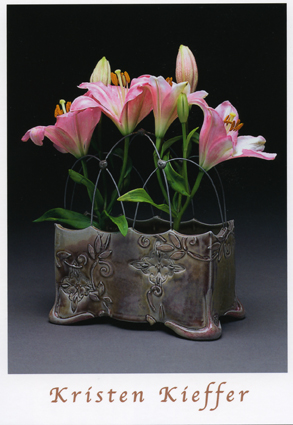
Wire flower brick*, 2005
KK_postcard_2003
Flower boat (Corset series), 2003
KK_postcard_ 2001
Lady vase, 2002
KK_gradschool_postcard_2001
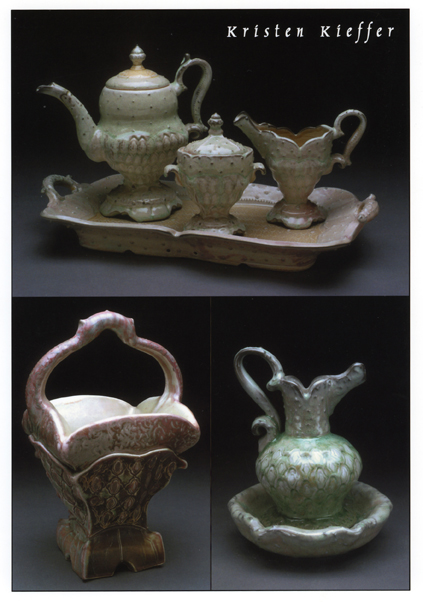
Tea set, Flower basket and Pourer with Saucer, 2001

I have had a “publicity” postcard made every year or two since 2001.  (There are two other postcards from ’95 and ’98 I’ll have to dig up for another—more humorous—post.)  The two most recent cards, with the jars and cups, are cone 7 electric; the others are cone 10 soda reduction.  The image directly above is my MFA graduation show card from Ohio University.  Six postcards of work from four different studios.  It’s interesting to see how things have changed, most notably after my thesis card, going from what I see as just “ornate” to more “elegant”.  Aside from additional layering, the surfaces haven’t changed a lot, but the lines that define the forms have.  They are more crisp and where I see the elegance happening.  I was the photographer for all of these too, baring witness to the transition from film to digital.

*If you would like a postcard, I would like for you to have one.  My most current 2008 Covered jar postcard and the 2005 Flower Brick postcard are still available.  (The former because it’s still new and the latter because a printing error left me with 2500!)  Simply drop me an email with “Postcard” in the subject line, your mailing address in the body, and specify which card: 2008, 2005 or both.  I would love for you to have a pot, but this is a nice precursor, and something you can actually hold in the meantime.

onelovelyblogawardThank you to Charan Sachar of the great Creative with Clay blog for presenting me with one of his Lovely Blog Awards.  I appreciate the friendly acknowledgment!

Buy Handmade Here for Spring

kk_blb_corset_i

Spring is coming! I have added new items to my Online Store for your shopping and gifting (Mother’s Day, weddings, graduations) pleasure.  I hope you will buy handmade for yourself or someone special. P.S. You can still receive a postcard, just drop me a note.

kk-clover-cups-blackb-dots-i kk_covjars_closeup kk_grouping

http://www.KiefferCeramics.etsy.com

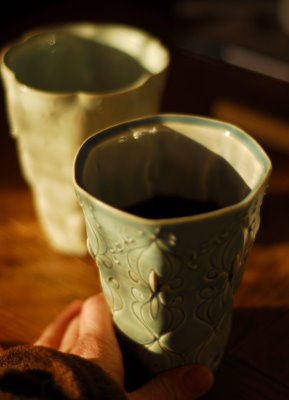
kieffer_tumblers_lesophieSpecial thanks to Leslie at Le Sophie
for her kind post about my work and store.
Check her photography out here.

Bird & Botanical Influences

illustration M.J.Heade Orchids Mckenzie engraving Peacock J.Hnizdovsky woodcut
 Plant Ornament book M.J.Heade passion Nouveau pattern
William Morris Tulip and Rose Vallentin illustration JollyBe cake William Morris lily drawing
Nouveau pattern M.J.Heade magnolia

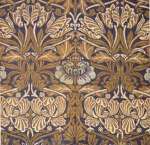
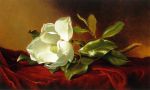
From top left: an Australian illustration; Orchids & Spray Orchids with Hummingbirds painting by Martin Johnson Heade; coloured engraving by Daniel Mackenzie; peacock and peahen illustration; rooster woodcut by J. Hnizdovsky;  Second row: image plate from the book Plants & Their Application to Ornament; Passion Flowers & Hummingbirds painting by Martin Johnson Heade; Kingfishers, Dragonflies & Flowering Rush and Butterflies & Wood Sorrel illustrations by M. P. Verneuil; Third row: Tulip & Rose fabric by William Morris (1876); illustration by Mrs. Vallentin from the book Women of Flowers: A Tribute to Victorian Women Illustrators (J. Kramer, 1996); “Neoclassical floral design” wedding cake* by JollyBe Bakery; Golden Lily drawing for wallpaper by William Morris; Fourth Row: Bats & Poppies and Butterflies & Bellflowers illustrations by M. P. Verneuil; A Magnolia on Red Velvet painting by Heade.
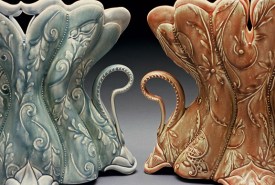
Kieffer corset detailsFloral, or at least curlicue, imagery has been a part of (i.e. handles) or on the surfaces of my work for a while. But it was a more general reference. In the last two years, I have begun to place some of the botanical and animal (especially birds) imagery I enjoy, more literally into the surfaces. (I purposefully wrote “into” instead of “onto” because I hope the way that I apply slip, stamp and carve the surface makes the imagery feel a bit more a part of the form rather than flat.)

When I look at the illustrations above, what I like are the soft, repetitive lines that resolve themselves into symmetrical, organic pattern iced with color. The botanicals are easy to come by at antique shops, and I own a few. These drawings appeal to me more than a photograph would; they have a different kind of detail, slightly stylized and romantic. The Nouveau drawings and prints appeal to my sense of pattern and layering—a bird disappeared into a thickness of leaves.

I’m pretty sure the first Martin Johnson Heade painting I saw was at the National Gallery in D.C. a few years ago. They are striking in person, especially for their modest size. They have a wonderfully mysterious atmosphere and depth I would like to capture in some of my own bigger pieces.

Kieffer cups w. animalsMy favorite class as a kid —other than art— was my fifth grade science class with Mr. Morton in Louisville. He could imitate the sound of every bird in the field and trees behind the school, and describe their peculiar behaviors. I thought that was really cool. Between him and my parents, my interest (that curiosity and admiration) in nature, has been there for awhile, but I’ve only just now figured out how I might include it in my work. I think too, in our current culture, we need to reconnect with what’s outside.

Briefly, the peacock and rooster images have popped up in my work lately as an amusing way to quietly question the gender of decoration. If a decorative male bird is featured on work that is perceived as feminine because it is decorative, is it [the work] feminine or masculine? (Did ya catch that?)

Kieffer covered jars I just completed the two greenware covered jars pictured here (not a great image, sorry). This is a new form for me, and bigger too. The one on the left (15″h) has lilacs, and the other (13″h) reminds me of wallpaper.

On a different note, I am off for two weeks to play in clay with a group of other artists during a residency at Watershed called Artists-Invite-Artists. So I’m signing off for that time. May I suggest, while I am stepping away from my computer, that we all spend some of the summer reading real words on paper, like the imminent issue of SP hitting theoretical newsstands post haste!!
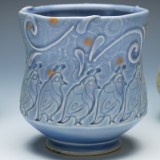
*Another cake, I know, I couldn’t resist. I also forgot to mention in the post below that I listen to CAKE all the time. These cakes from JollyBe are amazing, and will probably be featured here every time I mention an influence because she has one for everything! The one I pictured above stated with the image, “…design derived from a mattress cover chosen by the bride who uses mattress design as a source of inspiration for her own art.” How perfect is that for what I’ve been writing about?!
Back in July!